50 Mandala Coloring Pages Graphics
As a graphic designer who’s built brand identities for handmade studios, launched print-on-demand collections, and crafted social media visuals for mindful lifestyle brands, I recently evaluated the 50 Mandala Coloring Book for Adults as a potential design asset for a real client project: a seasonal wellness boutique launching a summer self-care kit. My goal wasn’t just to see if it “looks nice”—but whether it delivers functional, on-brand, commercially viable visual support.
A First Impression That Sets the Mood—Not Just Fills Space
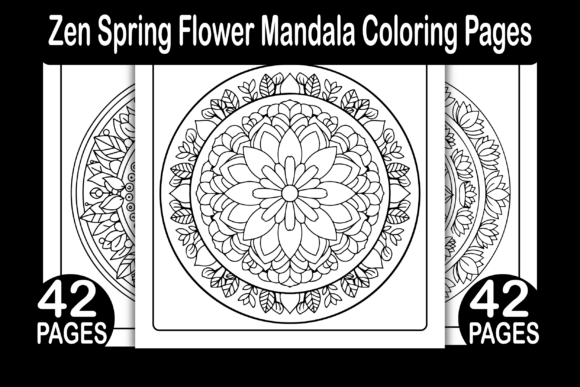
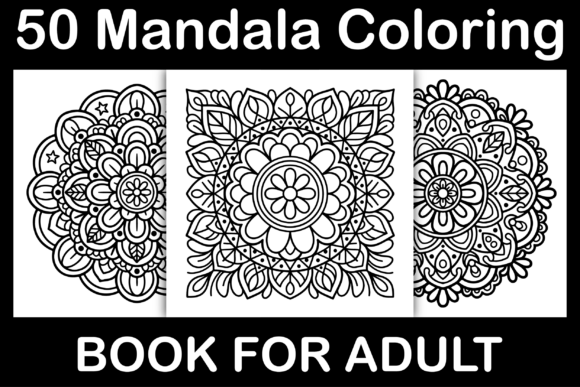
The moment I opened the file, the tone was clear: intentional, meditative, and quietly confident. These aren’t generic doodles—they’re balanced, symmetrical, and rich in rhythmic detail. Each page feels like a hand-drawn illustration translated into clean, high-resolution line art. The 8.5” x 8.5” dimensions are ideal—not too cramped, not overwhelming—and the consistent aspect ratio makes them instantly adaptable across layouts. For a client focused on calm, authenticity, and tactile experience (think linen packaging, soy candles, herbal tea blends), this set lands with emotional precision. It doesn’t shout; it invites.
Where It Shines in Real Client Work
In practice, the 50 Mandala Coloring Book for Adults excels where visual warmth and intentionality matter most:
- Printable design for digital product bundles—especially when paired with guided journal prompts or affirmation cards;
- Packaging design accents: subtle background textures on gift boxes, foil-stamped inner liners, or die-cut labels;
- Social media graphics for Instagram carousels and Pinterest pins—layered behind short quotes or used as frame elements around product mockups;
- Cricut project foundations for custom vinyl decals, reusable stickers, or layered iron-on transfers for tote bags and apparel;
- Brand identity extensions: not as a logo, but as a recurring motif in email headers, website dividers, or editorial design elements for blog posts about mindfulness;
- Product mockups—particularly for Etsy product listings, where a mandala page placed beside a ceramic mug or woven mat instantly signals “handmade + holistic.”
It also holds up beautifully in sublimation design workflows and integrates cleanly into Canva templates for small business owners managing their own marketing.
Where to Use It Thoughtfully—Not Automatically
This isn’t a universal plug-and-play asset. Its strength lies in its intricacy—and that becomes a limitation in certain contexts:
- Avoid using it at very small sizes (under 2” wide) without simplifying key linework—it loses clarity and can feel muddy;
- Steer clear of placing it over busy or low-contrast backgrounds unless you’ve pre-tested contrast ratios—some motifs recede rather than pop;
- It doesn’t suit minimalist corporate branding or tech-forward B2B campaigns where restraint and sharp hierarchy are non-negotiable;
- Don’t force it into dense layouts with multiple typefaces or competing illustrations—it needs breathing room to function as a calming anchor, not visual noise.
How It Shapes Perception—Beyond Aesthetics
When applied intentionally, the 50 Mandala Coloring Book for Adults elevates perceived craftsmanship and care. In a crowded creative marketplace, it signals that the brand values slowness, attention to detail, and sensory experience—qualities that directly boost visual trust and audience engagement. Used across touchpoints (a mandala on a sticker, echoed in a web banner, repeated on a printable planner), it strengthens brand consistency without feeling repetitive. And because each page is distinct yet tonally unified, it supports themed collections—like “Summer Stillness” or “New Moon Rituals”—without requiring custom illustration from scratch.
Practical Designer Notes Before You Deploy
Before integrating this into any commercial design project, here’s what I tested and recommend you verify:
- Test in black and white: Confirm line weight holds up when printed on standard copy paper or kraft stock—no hairlines disappearing;
- Check contrast on light AND dark backgrounds: Some pages have finer interior lines that vanish on black unless inverted or thickened;
- Preview at scale: Zoom out to 25% to assess overall balance; zoom in to 200% to spot stray pixels or inconsistent strokes;
- Place on real mockups: Try it on a mug, notebook, or fabric swatch—not just a flat PNG preview;
- Test print quality: Run a sample on your intended printer or POD partner (especially important for print-on-demand sellers);
- Review file formats: Confirm whether you’re receiving SVG (ideal for scaling and editing) or only high-res PNG (great for social media graphics, less flexible for resizing);
- Inspect transparency: If PNGs are included, ensure clean edges and alpha channels—critical for sticker design or t-shirt design overlays;
- Pair with typography: Try each mandala against serif, sans serif, script, and display fonts—the rhythm of the art should complement, not compete with, your type hierarchy;
- Confirm commercial license: Double-check usage rights for Etsy product listings, client deliverables, and resale—this is non-negotiable for professional work.
Final Verdict: A Strategic Creative Asset, Not Just Clipart
The 50 Mandala Coloring Book for Adults isn’t filler—it’s a mood-setter, a texture-builder, and a quiet differentiator. For designers supporting handmade business clients, wellness brands, educators, or spiritual entrepreneurs, it’s a rare design bundle that balances artistic integrity with practical versatility. When used with intention—as part of a broader creative design strategy—it reinforces authenticity, deepens emotional resonance, and helps turn functional digital product or printable design into something that feels truly held. Just remember: its power lies not in how much you use it—but how thoughtfully you place it.