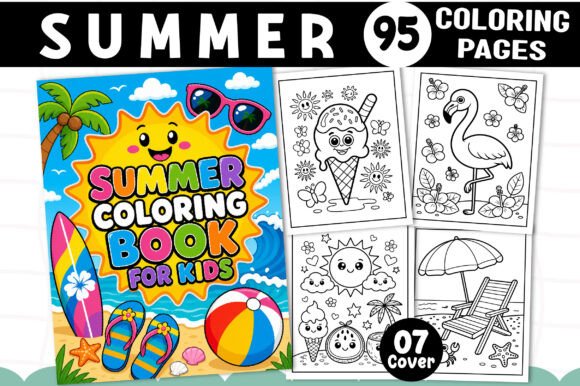
SUMMER COLORING BOOK for KIDS
First Impressions: Light, Playful, and Ready for Stitching
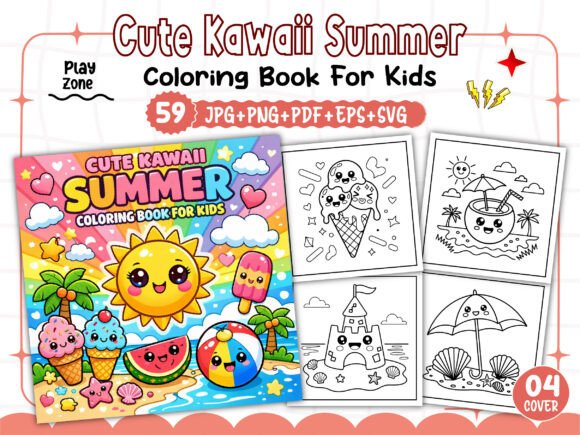
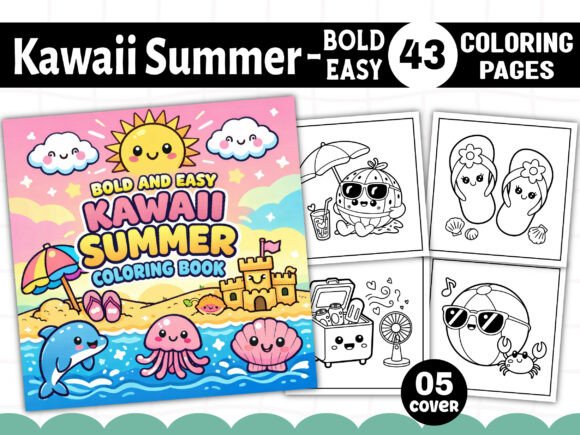
Opening the SUMMER COLORING BOOK for KIDS zip file feels like flipping through a sun-drenched sketchbook—clean outlines, generous negative space, and joyful summer motifs: ice cream cones, flip-flops, palm trees, watermelons, and smiling suns. As an embroidery designer who’s stitched hundreds of kids’ designs for boutique clients and Etsy shops, I immediately notice what this isn’t: it’s not overly intricate, not densely filled, and not built for photorealism. Instead, it leans into the charm of hand-drawn simplicity—ideal for coloring pages, yes, but also quietly perfect for embroidery when approached with intention.
A Real-World Test: Embroidering a Personalized Tote for a Local Daycare
Last week, I used one of the larger illustrations—a cheerful beach umbrella with wavy lines and open spaces—from the SUMMER COLORING BOOK for KIDS to embroider a cotton canvas tote for a neighborhood summer camp. No digitizing from scratch; I traced key outlines into a clean machine embroidery design, keeping stitch types minimal: satin stitch for borders, light fill stitch for shaded areas like the umbrella’s canopy, and running stitch for subtle texture in the sand. The result? A finished product that looked handmade—not mass-produced—and held up beautifully after two rounds of washing. Parents commented on how “clear” and “friendly” the design felt—not too busy, not too babyish, just right for ages 3–8.
Where This Coloring Page Design Shines in Embroidery
- Custom apparel: Works especially well on sweatshirts and tees where bold, legible shapes read at a glance—even from across a playground.
- Tote bag design & pillow covers: Generous line weight and open composition prevent visual clutter on textured or loosely woven fabrics.
- Baby embroidery & nursery decor: Soft curves and rounded corners feel gentle and age-appropriate without needing heavy embellishment.
- Embroidered patch creation: Clean outer edges make it easy to convert into a sew-on or iron-on patch—no jagged silhouettes or fragile inner details.
- Printable mockups & digital product previews: High-resolution source files let you generate crisp lifestyle images for Etsy listings or social media—critical for craft business visibility.
Where to Proceed Thoughtfully
The SUMMER COLORING BOOK for KIDS isn’t magic—it’s a starting point. Its strength is flexibility, but that means you’ll need to adapt it thoughtfully depending on your project:
- Small hoop sizes (under 4"): Some full-page illustrations may need cropping or simplification. Focus on one central motif—like the watermelon slice—rather than trying to fit the entire scene.
- Thin or stretchy fabric: Avoid dense fill stitches in delicate areas. Opt for outline + satin border instead of heavy fills—especially on onesies or lightweight caps.
- Dark fabric: Test thread colors early. Light yellow or mint green satin stitching pops beautifully on navy or charcoal—but only if contrast is intentional. Don’t assume white will always read clearly.
- Curved surfaces (caps, hats): Prioritize flatter elements—sun rays, simple sandals, or ice cream scoops—over long horizontal banners or wide landscape-style layouts.
- Frequent-wash items (tea towels, baby bibs): Reinforce stitch density in high-friction zones. A single-layer running stitch for grass lines may fray over time—add a second pass or switch to satin.
What It Adds to Your Finished Product—Beyond Just Looks
Using the SUMMER COLORING BOOK for KIDS thoughtfully elevates more than aesthetics—it builds trust. Customers recognize when a design feels considered, not copied. That relaxed, hand-sketched quality reads as authentic craftsmanship—not generic clip art. For Etsy sellers, that translates directly to higher perceived value and fewer “Is this really handmade?” questions. For small shop owners, it supports cohesive branding: imagine matching embroidered tea towels, aprons, and tote bags—all pulled from the same joyful visual language. And for holiday embroidery or personalized gifts? It invites interaction. Kids love spotting familiar shapes; parents appreciate the calm clarity—no visual noise, no confusing detail.
Practical Designer Notes Before You Stitch
- Always test the SUMMER COLORING BOOK for KIDS design on scrap fabric first—especially if using stabilizer layers or blending thread colors.
- Review stitch density in software before hooping. If fills look heavy, reduce density by 10–15% for breathable fabrics.
- Check licensing terms carefully. Since this is listed as Graphics in the Coloring Pages category, confirm whether commercial use of finished embroidered items is permitted—or if resale of the digital embroidery file itself is restricted.
- Use black-and-white mockups to assess contrast and legibility—this reveals hidden weak spots in thin lines or crowded sections.
- Compare how the design reads on both light and dark backgrounds. Some motifs (like the flip-flop with laces) gain personality with contrasting thread, others simplify better with tonal stitching.
- Choose stabilizer based on fabric texture—not just weight. A tear-away works fine for quilting cotton, but cut-away adds durability for stretchy knits or frequent-wash items.
Final Thought: A Quietly Versatile Asset
The SUMMER COLORING BOOK for KIDS won’t wow with technical complexity—but that’s its quiet power. In a market saturated with over-digitized, over-stitched kids’ designs, its breathing room and warmth stand out. It doesn’t shout. It invites. Whether you’re stitching a one-of-a-kind baby blanket, prepping a batch of custom sweatshirts for a summer pop-up, or building a cohesive line of printable embroidery kits, this set offers reliable, adaptable, human-centered design assets. It’s not just another coloring page—it’s a thoughtful foundation for real embroidery projects that people actually want to wear, use, and gift.