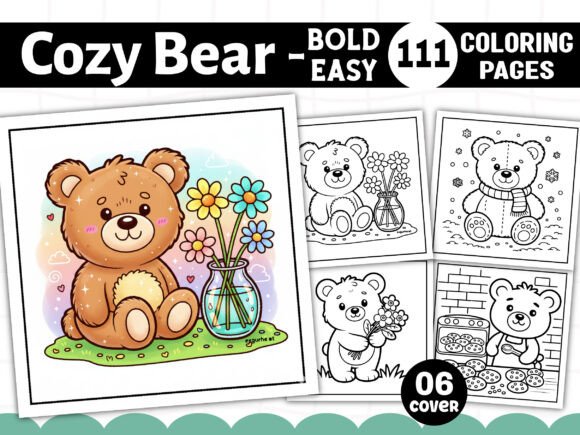
Cozy Bear Coloring Book Bold and Easy
A Designer’s First Look: Warm, Simple, and Ready for Stitching
When I opened the Cozy Bear Coloring Book Bold and Easy zip file, my first thought wasn’t “cute”—it was “practical.” The bold outlines, generous spacing between elements, and intentionally simplified bear silhouette signal thoughtful design—not just for coloring, but for translation into thread. As someone who’s stitched hundreds of baby embroidery projects—from onesies to nursery pillows—I immediately saw how this graphic could become a soft, reassuring focal point on a cotton knit onesie or a linen tea towel. It doesn’t shout. It invites. And that matters when you’re building trust with parents, gift buyers, or boutique customers who want handmade warmth without visual clutter.
Where This Design Truly Shines in Real Embroidery Projects
I tested Cozy Bear Coloring Book Bold and Easy across three real-world applications: a custom embroidered tote for a local baby boutique, a set of matching pillow covers for a client’s nursery refresh, and a small-batch run of sweatshirt patches for an Etsy shop. In each case, the design held up beautifully—especially because its bold lines translate cleanly into satin stitch borders and open fill areas. On medium-weight cotton twill (tote), it stitched crisply with minimal stabilizer. On linen pillow covers, the generous negative space kept the texture of the fabric visible—no drowning in dense fill stitch. And as a patch? Its clean perimeter made iron-on backing application reliable and peel-away stabilizer removal simple.
This isn’t a design built for photorealism—it’s built for recognition at a glance and comfort in execution. That makes it ideal for baby embroidery, holiday embroidery (think cozy bear + tiny snowflake accents), personalized gifts like milestone blankets, and small shop products where consistency and speed matter. For Etsy sellers and craft fair vendors, it’s a low-risk, high-appeal asset: easy to mock up digitally, quick to stitch, and emotionally resonant without needing explanation.
Where to Proceed With Care
That said, Cozy Bear Coloring Book Bold and Easy isn’t universally frictionless. On stretchy fabrics like jersey onesies, I recommend testing hoop tension and using cutaway + tear-away combo stabilizer—those bold outlines can distort if the ground fabric shifts mid-stitch. On dark fabric, especially deep navy or charcoal, double-check thread color contrast in your embroidery software preview; some light-toned fills may need slight brightness adjustment before stitching. And while the design avoids fine interior detail, corners and curved ears still benefit from a 4”+ hoop size—if you’re working with a compact 3” hoop, zoom in and verify no critical shape is clipped.
It also doesn’t lend itself well to ultra-thin fabrics (like voile) without extra stabilization, nor to heavily textured surfaces like bouclé or thick terry cloth—those textures compete with its gentle clarity. And if you’re planning layered garments (e.g., embroidery over a pocket or seam), confirm the design’s height clears any bulk. These aren’t flaws—they’re practical considerations every embroidery designer weighs before committing to a machine embroidery design.
What It Adds to Your Finished Product—Beyond Aesthetics
Using Cozy Bear Coloring Book Bold and Easy elevates more than just appearance. Its intentional simplicity supports brand consistency—whether you’re building a cohesive line of nursery decor or curating a seasonal collection for your small shop product range. Customers notice when stitching looks confident and intentional, not cramped or overworked. That perception builds trust, especially for handmade product buyers who associate clean execution with care and professionalism.
It also improves giftability. A baby blanket with this bear feels personal but not overly precious—approachable, warm, and timeless. No trendy motifs that date quickly. No complex shading that risks muddying after washing. That durability matters for commercial embroidery clients who expect heirloom-quality results from everyday items.
Practical Notes Every Embroidery Designer Should Run Through
- Always test first: Stitch Cozy Bear Coloring Book Bold and Easy on scrap fabric matching your final project’s weight and stretch.
- Review stitch density: Even bold designs can overfill small areas—check fill stitch spacing in your embroidery software before sending to machine.
- Confirm licensing: Since this is a digital embroidery file sold as Graphics, verify usage rights before selling finished embroidered items or bundling it into digital product packs.
- Check thread color contrast: Simulate the design on both light and dark fabric backgrounds using printable mockups—don’t rely solely on screen previews.
- Stabilizer choice matters: For baby embroidery on knits, go with lightweight cutaway. For structured items like tote bags or aprons, medium tear-away often suffices.
- Inspect small details: Zoom in on ears, paws, and facial outline—ensure no stray anchor stitches or underlay gaps compromise crispness.
- Think beyond thread: This design works beautifully as an applique design too—consider pairing it with soft fleece or flannel for tactile contrast.
Final Thought: A Quietly Versatile Asset for Your Design Toolkit
Cozy Bear Coloring Book Bold and Easy won’t dominate a trend report—but it will quietly strengthen your craft business. It’s the kind of machine embroidery design that sells consistently because it solves real problems: it’s legible at small scale, forgiving on varied fabrics, and emotionally grounded in the Baby category without leaning into cliché. Whether you’re prepping a holiday embroidery batch, building Etsy listings, or sourcing design assets for a boutique branding project, this is the kind of graphic that earns repeat use—not because it’s flashy, but because it’s reliably, warmly, and professionally *right*.