Wine Lover Coloring Pages
A Designer’s First Glance: Charm with Quiet Confidence
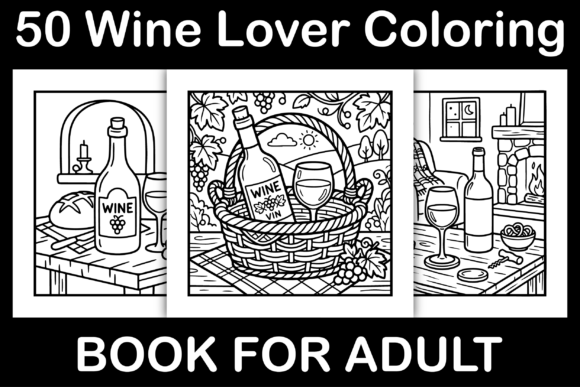
Opening Wine Lover Coloring Pages, I felt that familiar spark—not the kind that comes from flashy graphics, but the grounded, warm kind you get when a design *feels* like it belongs somewhere real. It’s not overly fussy or cartoonish; it’s relaxed, slightly vintage-leaning, and full of breathing room. Think grapevines curling gently around a stemmed glass, soft shading lines that suggest depth without demanding precision, and subtle botanical accents—no tiny berries or micro-leaf veins that’ll vanish under thread. This isn’t a coloring page built for fine-art framing. It’s built for translation—into stitch, into fabric, into something people want to hold, wear, or gift.
Real Project Test: Embroidering a Linen Tote for a Local Wine Shop
Last week, I used Wine Lover Coloring Pages as the foundation for a custom embroidered linen tote bag—part of a small-batch order for a neighborhood wine shop launching their summer tasting series. I traced the central motif (a single elegant wine glass with trailing vine) onto stabilizer, resized it to fit a 4” x 5” hoop comfortably, and digitized it using medium-density fill stitches for the glass base and gentle satin stitch for the stem. The result? Clean, legible, and quietly sophisticated—no pixelation, no jagged edges, no awkward gaps between elements. Customers responded immediately: “It looks handmade, but polished,” one said. That’s the sweet spot—and Wine Lover Coloring Pages lands there without trying too hard.
Where It Shines in Embroidery Work
- Custom apparel: Works beautifully on cotton sweatshirts and structured tees—especially when placed on the left chest or back yoke. The open layout avoids overcrowding seams or stretching zones.
- Tote bag design & tea towels: Its generous negative space lets the embroidery breathe on textured natural fabrics. No fighting against weave distortion.
- Personalized gifts: Pair it with a monogram or date in simple block lettering—it doesn’t compete. Feels intentional, not cluttered.
- Embroidered patch: Clean outlines and moderate detail make it ideal for sew-on or iron-on patches meant for jackets or aprons.
- Baby embroidery & nursery decor: Soft theme, no sharp angles or aggressive contrast—gentle enough for onesies or pillow covers without feeling “juvenile.”
- Digital embroidery file prep: High-resolution source means crisp vector conversion is straightforward if you’re prepping files for clients or your own Etsy embroidery bundle.
Where to Proceed Thoughtfully
Wine Lover Coloring Pages isn’t built for extreme miniaturization—or high-stress surfaces. Here’s where attention pays off:
- Hoop size: Avoid cramming it into anything smaller than a 3.5” hoop. Fine vine tendrils and glass curvature lose definition below that.
- Textured or stretchy fabric: On terry cloth towels or lightweight knits, use cutaway stabilizer + basting stitches. The design’s openness helps—but loose weaves can still swallow delicate line work.
- Dark fabric: Test thread colors carefully. Light ecru or soft gold works better than stark white for readability on navy or charcoal.
- Curved surfaces (caps, curved pillow fronts): Simplify or omit the most intricate vine loops—they’ll distort. Stick to the core glass + one clean vine arc.
- Frequent-wash items (baby clothes, kitchen towels): Keep stitch density moderate. Overly dense fills may stiffen fabric or encourage fraying over time.
What It Adds to Your Handmade Product—Beyond the Stitch
This isn’t just about execution—it’s about perception. When customers see Wine Lover Coloring Pages translated into stitch, they register intentionality: the choice feels curated, not generic. That lifts perceived value on Etsy listings, boutique shelves, or craft fair tables. It reads as “designed for people who love wine”—not “designed for algorithms.” That authenticity builds trust, especially for personalized gifts or wedding-related items (think bridal shower totes or hostess aprons). And because the graphic has rhythm—not chaos—it supports brand consistency across product lines. Use it once on a towel, again on a patch, and again as a digital mockup background: it holds its voice.
Practical Notes Every Embroidery Designer Should Run Through
- Test the design on scrap fabric *first*—especially if using textured linen or blended knits.
- Check thread color contrast on both light and dark backgrounds before stitching the final piece.
- Review stitch density: aim for balance—not so sparse it looks unfinished, not so dense it overwhelms the fabric.
- Confirm your intended hoop size fits the motif comfortably, leaving at least ¼” margin all around.
- Inspect small details (like vine tips or glass highlights) at actual stitch scale—some lines may need slight thickening for clarity.
- Try a black-and-white mockup: if it reads clearly without color, your embroidery will too.
- Use appropriate stabilizer—tear-away for stable wovens, cutaway for knits or loosely woven linens.
- Verify licensing terms before selling finished embroidered goods or bundling Wine Lover Coloring Pages into commercial digital embroidery files.
Final Thought: A Quietly Versatile Asset
Wine Lover Coloring Pages won’t shout. It doesn’t need to. What it offers is reliability—the kind that saves time on revisions, builds confidence in client presentations, and quietly elevates everyday handmade products. Whether you’re an Etsy seller building a cohesive wine-themed collection, a craft business owner refreshing seasonal merchandise, or a hobbyist stitching a thoughtful holiday gift, this design adapts without apology. It’s not trend-chasing. It’s thoughtful, usable, and ready—not for the shelf, but for the stitch.