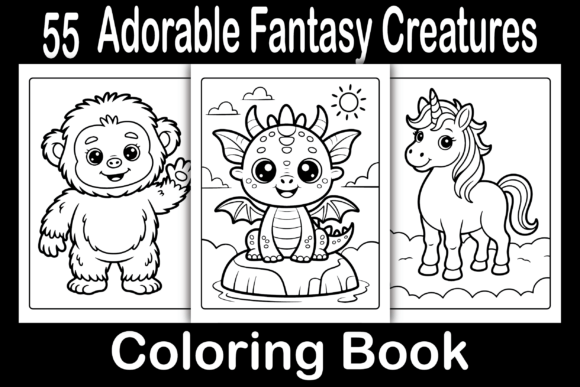
Adorable Fantasy Creatures Coloring Book
A Designer’s First Glance: Whimsy That Stitches Well
When I opened Adorable Fantasy Creatures Coloring Book, my first thought wasn’t “cute”—it was “stitchable.” As someone who’s turned dozens of coloring-page-style graphics into machine embroidery designs for baby onesies, boutique tote bags, and Etsy-appliqué patches, I scan fast: clean outlines, intentional negative space, balanced weight in line thickness, and breathing room around key features. This collection delivers that. The 55 creatures—think sleepy unicorns, curious griffins, mushroom-hatted foxes—aren’t overly fussy. Their shapes hold up at 3–4 inches wide, with contours that translate cleanly to satin stitch borders and soft fill-stitch bodies. No tiny antlers lost in thread nests. No fragile wings that’ll vanish under dense stitching.
Where It Shines in Real Embroidery Projects
I tested one of the smaller designs—a curled-up dragon with heart-shaped smoke puffs—as a sweatshirt chest emblem. On midweight cotton fleece, it stitched cleanly with minimal stabilizer. The rounded silhouette framed nicely in a 4” hoop, and the gentle curves gave the satin stitch a natural flow—not stiff, not wobbly. That same dragon worked beautifully as a hand-embroidered patch on a denim apron (using backstitch + lazy daisy for texture), and scaled down perfectly for a baby bib with simple running-stitch accents.
For craft business owners, this is versatile inventory: use a mermaid design as a focal point on a tea towel (keep fill stitches open for breathability), or pair a tiny phoenix with script lettering for a personalized holiday gift pillow cover. Etsy sellers will appreciate how these read clearly in printable mockups—clean lines mean crisp digital previews, which boosts buyer confidence before they click “add to cart.” And because the style leans warm and inclusive—not hyper-detailed or edgy—it fits nursery decor, gender-neutral baby embroidery, and small shop merchandise without needing heavy reworking.
Where to Pause—and Plan Ahead
This isn’t a one-size-fits-all embroidery file. These are coloring pages, not pre-digitized embroidery files—so don’t assume automatic stitch logic. If you’re planning a high-density applique design or layered satin-stitch wings, you’ll need to digitize carefully. Tiny details like star freckles or eyelash curls may not survive on stretchy fabric (think t-shirt knits) without added underlay or reduced stitch density. On dark fabrics, test contrast: some lighter-line creatures benefit from a subtle outline stitch or light-thread backing to keep definition.
Also watch curved surfaces. A goblin perched on a cap brim? Lovely in print—but its base needs flattening or strategic placement to avoid distortion. And if you’re stitching on textured linen or looped terry cloth, simplify interior details; those delicate flower crowns look charming on paper but can fuzz or blur when stitched densely.
What Your Customers—and Your Brand—Will Notice
Handmade buyers respond to authenticity and clarity. When an embroidered creature reads instantly—a smiling yeti, a wide-eyed pixie—it builds trust. It says “thoughtful,” not “generic clip art.” That matters whether you’re selling custom apparel or bundling digital embroidery files. Adorable Fantasy Creatures Coloring Book supports brand consistency: the cohesive style means your holiday embroidery line, baby collection, and boutique tote bag series feel like part of the same story—not a grab-bag of mismatched assets.
Giftability rises too. A child’s name stitched beside a friendly dragon on a pillow cover feels personal and joyful—not mass-produced. That emotional resonance lifts perceived value, especially for personalized gifts and wedding favors (think mini embroidered napkins with tiny winged cats).
Practical Notes Every Embroidery Designer Should Keep Handy
- Always test first: Stitch one creature on scrap fabric matching your final product’s weight, weave, and stretch.
- Check thread color contrast: Light creatures on light fabric? Add a fine outline stitch or switch to matte thread for depth.
- Review stitch density: Heavy fills may pucker thin cottons—opt for open-fill patterns or reduce density by 10–15%.
- Confirm hoop size early: Most designs scale well between 3”–5”, but verify clearance for corners and tails before digitizing.
- Inspect small details: Eyelashes, paw pads, and tiny horns often need manual cleanup in digitizing software—don’t rely on auto-trace alone.
- Test black-and-white mockups: If your digital preview looks muddy in grayscale, it’ll likely lack clarity in stitch.
- Compare light/dark backgrounds: Some creatures gain charm on navy denim; others recede. Trust your eye—not just the PDF preview.
- Use proper stabilizer: Tear-away works for stable fabrics; cut-away adds security for knits or frequent-wash items like baby clothes.
- Verify licensing: Since this is marketed for KDP, POD, and commercial use, confirm whether finished embroidered products or resale of digitized versions require additional permissions.
Final Thought: A Thoughtful Starting Point
Adorable Fantasy Creatures Coloring Book isn’t flash-in-the-pan trend bait. It’s a quietly capable set of graphics—designed with shape integrity and expressive simplicity in mind. For embroidery designers building a library of reliable, emotionally resonant assets, it’s a smart addition. For Etsy sellers crafting personalized gifts or small shop owners developing seasonal collections, it’s flexible enough to adapt—without demanding endless revisions. Just remember: it’s raw material, not a finished embroidery file. Respect its strengths, plan for its limits, and let the whimsy guide your stitch—not the other way around.