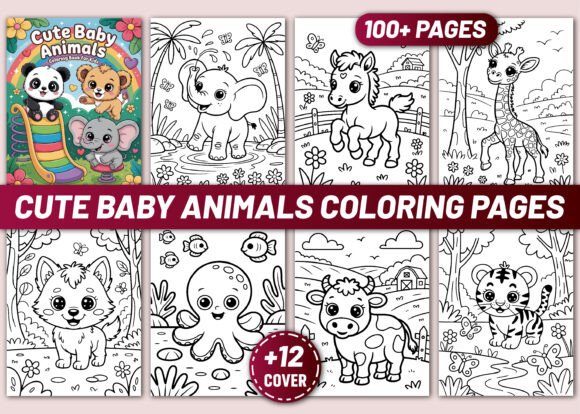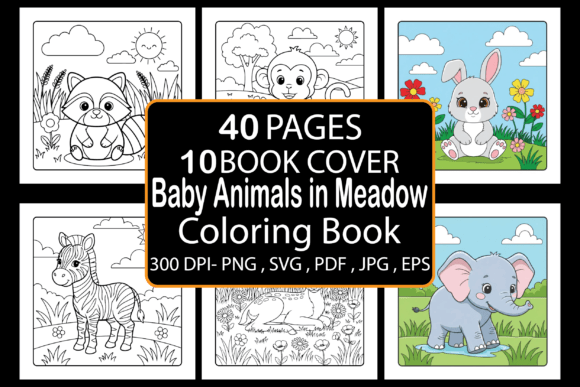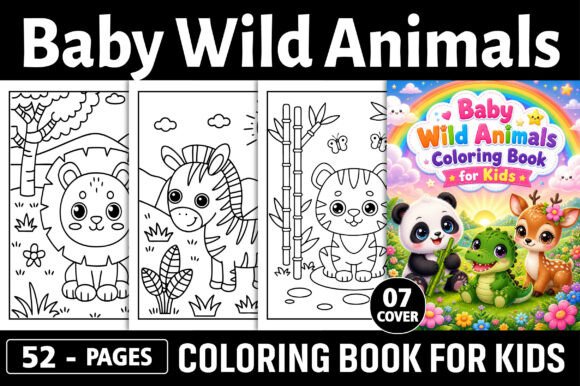
52 Baby Wild Animals Coloring Pages
A Designer’s First Glance: Sweet, Simple, and Stitch-Ready
When I opened 52 Baby Wild Animals Coloring Pages, my first thought wasn’t “cute”—it was “practical.” The line work is clean, confident, and intentionally uncluttered. No tiny crosshatching, no fragile linework that vanishes under thread. These aren’t hyper-detailed illustrations meant for framing—they’re friendly, rounded, expressive baby animals (think foxes with oversized paws, owls with soft eyes, elephants with curled trunks) drawn with embroidery in mind. The spacing between elements feels generous, the outlines are consistent in weight, and most designs sit comfortably within a 4"–5" diameter—ideal for standard hoops and common product placements like tote bag corners, baby onesie chests, or tea towel hems.
Real Project Test: Turning Pages Into Embroidered Tote Bags
Last week, I used three designs from 52 Baby Wild Animals Coloring Pages to embroider a set of organic cotton tote bags for a local nursery boutique. I chose the baby sloth, koala, and hedgehog—each had clear silhouette integrity and minimal interior detail, which translated beautifully into satin-stitched outlines with light fill-stitch bodies. Customers responded immediately: “It looks handmade but polished,” one said. “Not too busy—my toddler actually *sees* the animal.” That’s the quiet strength of this collection: it prioritizes recognition over realism. In embroidery, where stitch count and fabric behavior constrain complexity, that clarity isn’t just nice—it’s essential.
Where It Shines—and Where You’ll Want to Pause
52 Baby Wild Animals Coloring Pages works exceptionally well for:
- Custom apparel: Sweatshirt fronts, toddler tees, and reversible bucket hats all held the designs cleanly—especially when paired with medium-weight stabilizer.
- Baby embroidery: On swaddle blankets and bibs, the gentle scale and open shapes avoided bulk while keeping visual impact.
- Embroidered patch production: I digitized two designs as iron-on patches—clean edges stayed sharp, and the simplified anatomy meant fewer jump stitches and cleaner trimming.
- Holiday and gift embroidery: A set of four animal motifs stitched onto linen kitchen towels made instant, cohesive hostess gifts—no extra design work needed.
But be mindful on:
- Stretchy fabrics: The outlines hold up, but avoid placing dense fill areas directly over seams or high-movement zones (like underarm on a onesie) without testing.
- Dark or textured fabrics: Because these are coloring-page-style graphics—not pre-digitized embroidery files—you’ll need to adjust thread contrast deliberately. A light gray fox outline reads softly on charcoal fleece unless you boost stitch density or add an underlay.
- Curved surfaces: Caps and beanies require careful hooping and possibly slight simplification of interior lines—I omitted the inner ear details on the baby bear for a cap project and gained cleaner definition.
- Tiny lettering or fine accents: There’s none here—and that’s intentional. Don’t try to force delicate features; lean into the bold, approachable charm instead.
What This Means for Your Craft Business
If you’re an Etsy seller, small shop owner, or creative entrepreneur building a signature style, 52 Baby Wild Animals Coloring Pages offers reliable, brand-flexible design assets. It doesn’t scream “trendy”—it whispers “thoughtful.” That builds trust. Parents buying embroidered baby items respond to warmth and legibility, not clutter. Boutique buyers appreciate cohesive collections they can mix across product types (a pillow cover + matching tea towel + onesie set), and this set delivers exactly that—without requiring custom illustration time.
For digital product sellers: these are strong candidates for printable mockups or layered SVG bundles—but remember, as Graphics, they’re starting points, not finished embroidery files. Always confirm licensing before bundling them into commercial embroidery kits or reselling as digitized files.
Practical Embroidery Designer Notes
Before stitching your first piece:
- Test on scrap fabric—especially if using textured weaves or blends. Note how outlines behave at different densities.
- Check thread color contrast early. Try black, navy, and oat on both light and dark backgrounds using simple mockups.
- Review stitch density manually if digitizing yourself. These outlines translate well to satin stitch, but avoid overloading small bodies with heavy fill.
- Confirm hoop size compatibility. Most fit 4x4 hoops comfortably, but a few wider animals (like the baby giraffe with legs extended) may need 5x7.
- Inspect small details—eyes, noses, paw pads—at actual stitch scale. Simplify or consolidate if needed for readability.
- Try black-and-white mockups first. These designs rely on shape and proportion—not shading—so grayscale previews reveal true clarity.
- Use proper stabilizer: medium tear-away for stable wovens, cut-away for knits. Skip lightweight mesh—it won’t support the clean edge integrity these outlines deserve.
- Verify licensing before selling finished products or digital embroidery files derived from 52 Baby Wild Animals Coloring Pages. When in doubt, contact the creator.
Final Thought: Design That Serves the Handmade Experience
This isn’t flashy design—it’s functional, empathetic design. 52 Baby Wild Animals Coloring Pages respects the limits of thread, fabric, and human attention. It gives crafters room to personalize (add names, change colors, combine motifs), while keeping the core recognizable and charming. Whether you’re stitching a single personalized gift or scaling up for a wholesale nursery line, these pages don’t get in the way. They support your skill, honor your time, and let your handmade product speak clearly—softly, sweetly, and unmistakably.